
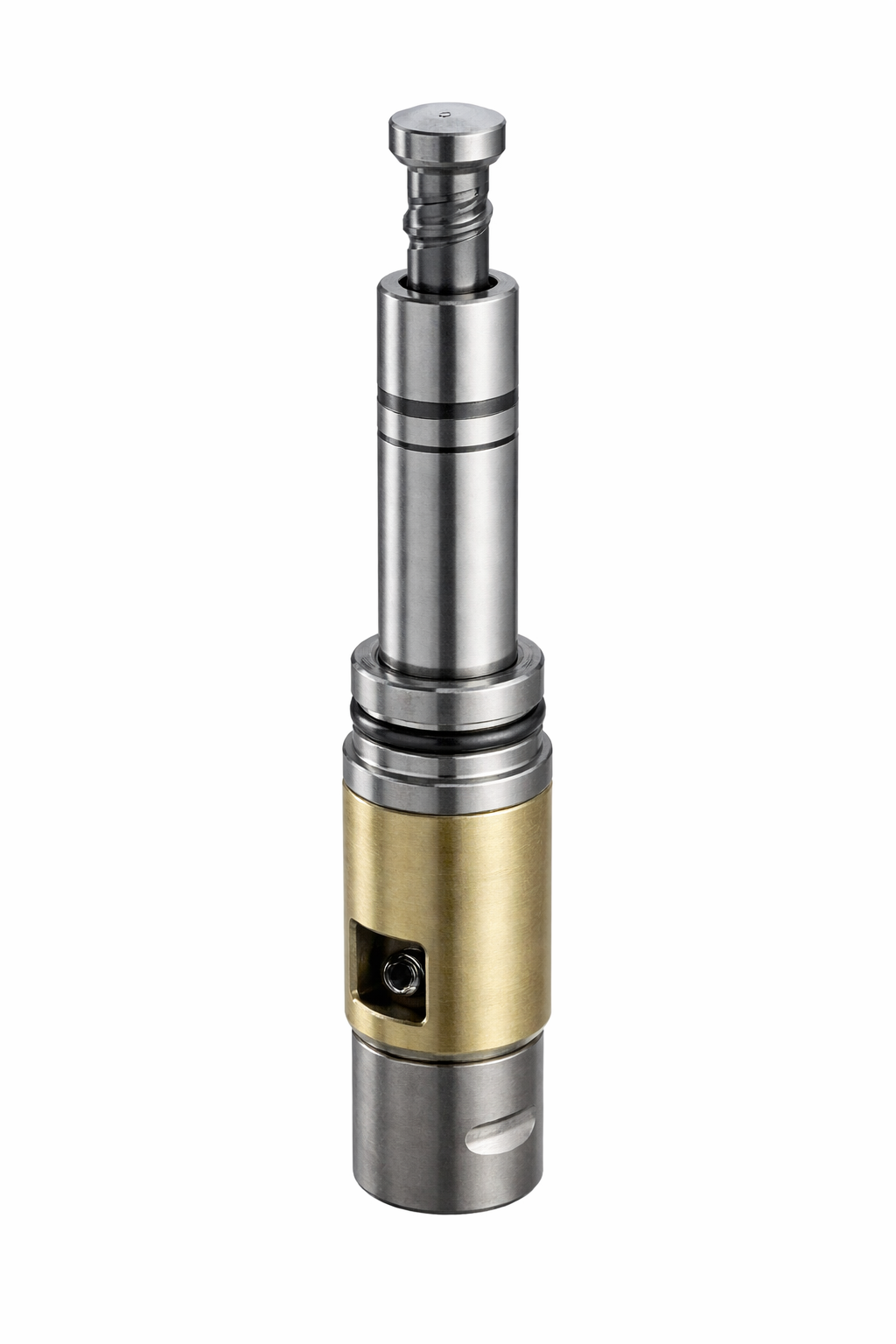
Function of the Plunger in the Injection Pump
The plunger compresses diesel fuel inside the barrel to generate extremely high pressure (sometimes over 300 bar) so the fuel can reach the injector.
Any minor problem in lubrication, cleanliness, pressure, or cooling will quickly cause wear.
⚙️ Main Causes of Plunger Damage in the Pump
1️⃣ Contaminated fuel (dirt or water)
This is the #1 cause in about 80% of cases.
Dust or water creates micro-scratches on the plunger and barrel → pressure loss → hard starting or power loss.
Water also causes pitting corrosion on the plunger surface.
🧠 Result: low pressure, smoke, hard starting, rapid wear.
2️⃣ Lack or poor internal lubrication
The plunger is lubricated by diesel itself.
If the diesel is dry or poor quality → friction increases → overheating and wear.
Some people use diesel mixed with oil or gasoline, or over-filtered fuel → lubrication properties are lost.
🧠 Result: worn plunger and barrel surfaces with visible scoring lines.
3️⃣ Water inside the pump
Causes internal rust in plungers and springs.
Water evaporates and leaves oxidation deposits → plunger sticking.
🧠 Result: plungers stick or seize during operation.
4️⃣ High pump temperature
If the engine overheats or the pump is near a heat source without sufficient cooling.
High heat affects the precise clearance between plunger and barrel → metal expansion → rapid wear.
5️⃣ Air entering the diesel line
Air bubbles inside the pump make the plunger strike without fuel (dry impact).
Dry running causes severe wear.
6️⃣ Weak supply pressure from the lift pump
Plungers operate without enough fuel flow → poor lubrication → overheating and early wear.
7️⃣ Long storage without operation
If the pump sits for long periods without diesel inside, plungers rust or stick.
Wear occurs immediately after restarting.
8️⃣ Off-spec diesel fuel
Some diesel types contain high sulfur or harmful additives causing internal wear.
Or accidental use of gasoline or diesel mixed with heavy oil.
9️⃣ Assembly or calibration errors
Incorrect clearance after overhaul
Wrong plunger orientation during installation
Poor cleaning after assembly
⚠️ Symptoms of Plunger Wear
- Hard cold starting
- Black or white smoke
- Noticeable power loss
- Ticking or whining noise from the pump
- Higher than normal pump temperature
- Slight diesel leakage from pump seals
🔍 Tips to Prevent Plunger Damage
✅ Use clean, properly filtered fuel and sealed tanks
✅ Replace fuel filter regularly (every 250–300 operating hours)
✅ Periodically clean the tank and hoses internally
✅ Check lift pump pressure regularly
✅ Never run the pump without fuel
✅ After overhaul, fill the pump completely with diesel before starting
✅ For long storage, fill with diesel and seal all openings tightly