
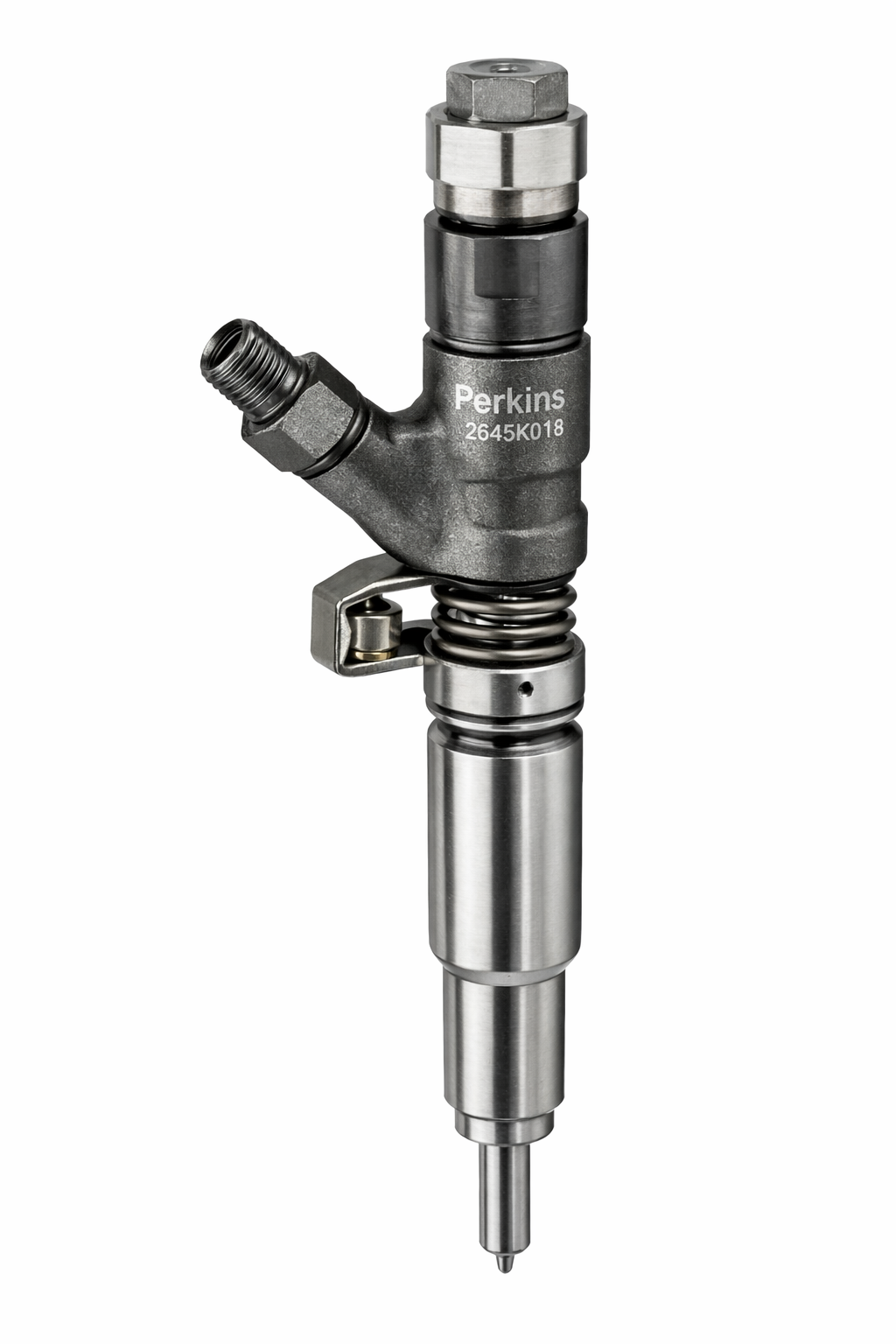
Why Perkins Mechanical Injectors Fail — Main Causes
Perkins diesel engines rely heavily on the precision of their mechanical fuel injectors. When these injectors fail, the engine loses power, smokes excessively, and consumes more fuel. Although Perkins injectors are durable, several common issues can cause premature failure.
1- Contaminated or Poor-Quality Fuel
The most common cause of injector failure. Contaminants or water in diesel fuel lead to:
· Erosion of the nozzle.
· Blockage of the tiny spray holes.
· Poor atomization and weak combustion.
2- Failure to Replace Fuel Filters Regularly
Fuel filters protect injectors from debris.
Delayed replacement results in:
· Nozzle clogging.
· Loud knocking sound.
· Reduced injector lifespan.
3- Incorrect Injection Pump Pressure
Improper pump pressure causes:
High pressure that damages the nozzle tip.
Low pressure that leads to poor spray patterns.
Overheating of the injector.
4- Wear and Tear of the Nozzle Needle
The internal needle suffers from friction over time, causing:
Ø Loss of sealing (leakage).
Ø Dribbling instead of fine atomized spray.
Ø Poor engine performance.
5- Running the Engine Under Heavy Load for Long Periods
This results in:
· High combustion temperatures.
· Stress on the injector nozzle.
· Micro-cracks forming in the nozzle tip.
6- Improper Installation or Calibration
Including:
· No testing on a calibration machine.
· Incorrect washer size.
· Over-tightening or under-tightening.
· These lead to leaks, smoke, noise, and early failure.
7- Using Non-Genuine Spare Parts
Counterfeit injectors often suffer from:
· Inconsistent pressures.
· Poor-quality metal.
· Rapid internal wear.
Conclusion
Perkins mechanical injectors are strong, but they demand:
✔ Clean fuel
✔ Regular filter changes
✔ Accurate calibration
✔ Proper engine load
✔ Genuine parts